Heart Chakra: What Is Anahata, Signs and How to Balance It
There is a difference between being close to people and truly connecting with them.
There are moments when bonds seem to flow naturally. Giving and receiving affection happens without heaviness, empathy appears without effort, and there is a calm feeling of belonging to the relationships you have chosen. At other times, something closes. Difficulty trusting arises, emotional distance appears even when you are together, or care for the other becomes so intense that it leads to forgetting yourself.
Within the chakra system, this ability to love, connect and create genuine bonds has a specific center. It is Anahata, also known as the heart chakra.
What is the heart chakra (Anahata)?
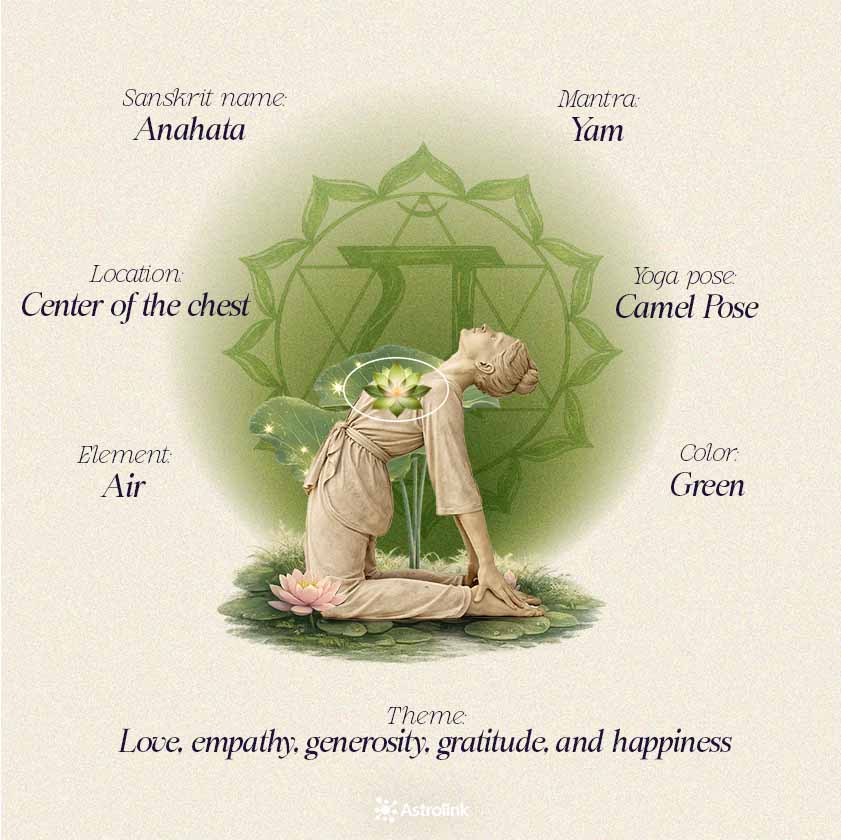
The heart chakra is the fourth of the seven chakras in the traditional energy system. Located in the center of the chest, near the heart, it is associated with love, empathy, compassion and the ability to create emotional bonds, both with others and with yourself.
In Sanskrit, Anahata is often translated as “unhurt”, “untouched” or “unstruck sound”. The name points to a more subtle dimension of human experience: an inner center of presence, affection and openness that does not depend only on external circumstances.
Also called the heart chakra, it occupies a unique position in the sequence of the seven chakras: it is exactly in the middle. Below it are the centers connected to foundation, emotions and individual identity. Above it are the centers associated with communication, perception and spirituality.
For this reason, the heart chakra is often described as a bridge between the material world and more subtle consciousness, between individual impulse and openness to the other.
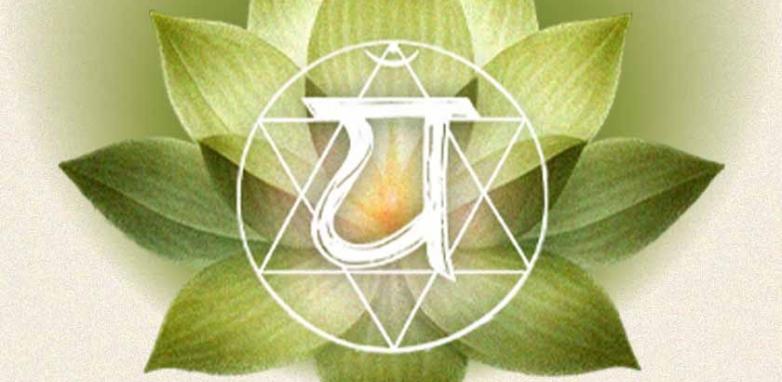
It is associated with the color green, connected to harmony, balance and regeneration, and with the Air element, a symbol of circulation, exchange and connection. Its symbol is a twelve-petaled lotus flower with two interlaced triangles at the center, forming a six-pointed star, an image that represents the union of opposites: masculine and feminine, reason and emotion, spirit and matter.
In energetic traditions, this chakra is also associated with the thymus gland, related to the immune system. The Greek word thymos referred to a vital force linked to the chest, associated with courage, spirit and dignity. This relationship is symbolic and does not replace medical evaluation, but it reinforces the central idea of this center: the connection between emotional state, vitality and openness to life.
Main information about the heart chakra:
- Sanskrit name: Anahata
- Meaning: unhurt, untouched or unstruck sound
- Position: center of the chest, near the heart
- Element: Air
- Color: green
- Mantra: Yam
- Central theme: love, empathy, compassion and emotional bonds
- Symbol: twelve-petaled lotus with a six-pointed star
If you are not familiar with the full chakra system yet, it is worth starting here: The 7 chakras: what they are, what they are for and how to balance them.
How does the heart chakra influence love, empathy and relationships?
This chakra is present in very concrete situations of emotional life. It appears in the ease or difficulty of showing affection, in the way you react to disappointment, in how much you can receive affection without avoiding it, and in the ability to care for others without losing yourself in that care.
When Anahata is balanced, bonds become lighter. There is a natural openness to welcome and be welcomed, empathy without demand and a kinder relationship with yourself. Self-love and love for others coexist without one needing to cancel out the other.
When it is out of balance, the movement can go in either direction. Emotional closure, difficulty trusting and distance in relationships may appear. Or the opposite: involvement so intense that boundaries dissolve, and caring for the other becomes a way of forgetting yourself.
In energetic traditions, the heart chakra is also associated with the cardiorespiratory system. Situations such as disappointments, losses and emotional wounds often leave marks in this region. It is no coincidence that many cultures associate emotional suffering with sensations in the chest area. This association is symbolic, not diagnostic, but it points to something real: emotions also express themselves in the body.
Blocked heart chakra: what are the main signs?
When the heart chakra, also called the chakra of the heart, is blocked or imbalanced, the relationship with affection and bonds becomes compromised. Sometimes through lack, when the heart closes. Sometimes through excess, when it loses itself in the other.
Signs of a weakened or blocked heart chakra:
- Difficulty trusting or opening up emotionally
- Tendency toward isolation or emotional distance
- Fear of intimacy or deeper involvement
- Difficulty receiving affection, praise or help
- Difficulty forgiving or moving past old wounds
- Intense self-criticism and lack of self-love
- Recurring feelings of sadness, anguish or irritation
Signs of an overactive heart chakra:
- Emotional dependence or constant need for approval
- Difficulty setting boundaries in relationships
- Tendency to take exaggerated responsibility for the other person’s feelings
- Excessive care as a way to avoid looking at yourself
- Persistent jealousy, resentment or possessiveness
- Draining relationships marked by emotional imbalance
These signs are not diagnoses. They are an invitation to observe how your bonds, your self-love and your openness to affection are right now.
What is a balanced heart chakra like?
When Anahata is in balance, the change appears in the quality of relationships and in the relationship with yourself: there is more lightness and more presence.
Some aspects that energetic traditions associate with a balanced heart chakra:
- Balance between caring for others and self-love
- Greater ease in showing affection and also receiving it
- Ability to forgive without needing to erase what happened
- Empathy and compassion without loss of autonomy
- More respectful and spontaneous relationships
- Emotional openness without dependence
- Feeling of connection with people and with the surrounding environment
- Self-acceptance and a kinder relationship with yourself
Balance, here, does not mean the absence of conflict. It means having a heart that can feel without closing and care without losing itself.
How to balance the heart chakra in everyday life?
The first movement is usually the most demanding: looking honestly at your own way of loving. How do you care for others? How do you receive care? Where are the patterns that repeat in relationships?
This observation is already a real step. From there, some practices can support the process.
Simple everyday gestures carry weight here: listening to someone with genuine attention, offering support without expecting something in return, expressing gratitude and showing affection in small exchanges. Cultivating presence in relationships, instead of merely being together, is a concrete way to strengthen this center.
But there is a difference between occasional practices and integrated work with the energy system. Understanding how the heart chakra relates to the other centers, which emotional patterns it carries and how to work with it in depth requires going beyond the surface.
This is the path the Astrolink Chakra Guide opens: a journey through the seven chakras in an integrated way, connecting body, emotion, behavior patterns and consciousness.