Balsamic Moon: Meaning, Energy, and What to Do During This Lunar Phase
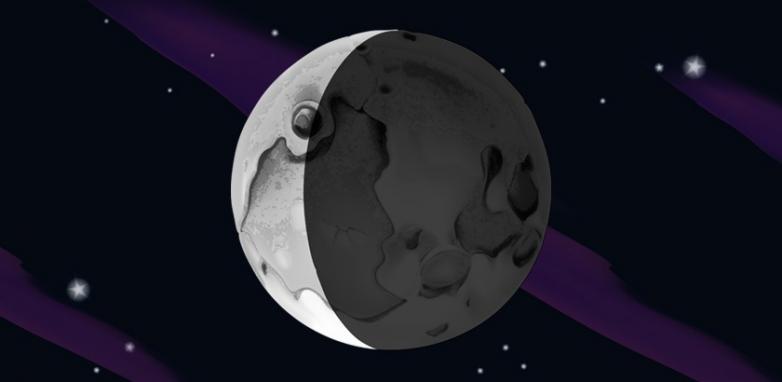
The balsamic moon is the eighth and final phase of the lunar cycle, occurring when the angle between the Sun and the Moon is between 315 and 360 degrees. It spans approximately the last four days before each new moon and represents a time of withdrawal, restoration, and closure: a period for releasing what no longer serves, integrating the lessons of the cycle, and preparing the inner ground for the new beginning ahead.
The balsamic moon sits between two energies: the waning quarter moon, which closes the cycle, and the new moon, which opens the next one. Seen from Earth, only a thin sliver of the Moon's surface remains illuminated. That sliver diminishes with each passing hour, as if the light were dimming in preparation to reignite with the next cycle.
It is best observed about one to two hours before sunrise. For those willing to rise early, the view can be striking: along the edge where the illuminated portion meets the dark side, craters and mountains cast long shadows across the surface.
What Does "Balsamic" Mean?
The word "balsamic" comes from "balsam," a plant used for millennia by herbalists and alchemists in medicinal preparations. Balsam was prized for its anti-inflammatory, healing, and calming properties. It was applied to wounds to cure, soften, and ease physical and emotional trauma.
Over time, the term also became a synonym for relief and comfort in the face of difficulty. The balsamic moon carries that same purpose: to settle the energy and calm the emotions after the intense movement of the full lunar cycle. It is the moment to slow down, reflect, and prepare for what is coming.
When Does the Balsamic Moon Occur?
The balsamic moon occurs when the angle between the Sun and the Moon is between 315 and 360 degrees. It is the final stage of the waning moon and lasts approximately the last four days of each lunar cycle, just before the new moon.
It repeats every month. Its placement in the natal chart can also carry significance: people born under a balsamic moon often carry a heightened sensitivity toward endings, closing processes, and the search for meaning in what has been lived.
Balsamic Moon vs. Dark Moon: What Is the Difference?
These two terms are sometimes used interchangeably, but they refer to slightly different things in astrology.
The balsamic moon covers the final four days of the lunar cycle, beginning when the Sun-Moon angle reaches 315 degrees and ending at the new moon conjunction.
The dark moon typically refers to a narrower window: the final hours just before the exact conjunction between Sun and Moon that marks the new moon. Some traditions use "dark moon" to describe the entire balsamic phase; others reserve it for that brief, fully dark moment immediately before the new moon begins.
For practical purposes, the balsamic period is the broader phase of closure and release. The dark moon, when used distinctly, is its most intense final point.
What Is the Energy of the Balsamic Moon?
The balsamic moon is a receptive and transitional phase. Its energy does not call for action but for contemplation. The time is one of retraction, restoration, healing, and rejuvenation.
During this phase, psychic energy reaches its peak and intuition becomes the primary guide. Insights arrive with greater clarity when inner stillness is cultivated. The analytical mind yields to subtler perception.
It is also the phase in which the cycle's results show themselves in their final form. What was planted at the new moon, tended through the crescent, and brought to fullness at the full moon is now complete. There is little left to adjust: what was sown is now being harvested.
Keywords for this phase: transformation, renewal, contemplation, clarity of intentions.
Sun-Moon angle: 315 to 360 degrees.
Phase type: receptive and transitional.
What to Do During the Balsamic Moon
The balsamic moon invites personal growth, maturation, reflection, and planning for the next cycle. It is an ideal time to:
Close unfinished business. The quiet clarity of this phase helps bring closure to what was left incomplete. Delayed conversations, postponed decisions, processes that were waiting for resolution: this is the right moment to bring them to a gentle end.
Release what no longer serves. The balsamic moon invites letting go without resistance. Rather than swimming against the current, the invitation is to accept things as they are. Leaving behind what does not work makes it possible to begin the next cycle without carrying unnecessary weight.
Reflect on the closing cycle. Contemplating what was lived, what was achieved, and what did not materialize. That honest evaluation becomes the raw material for the next beginning.
Rest and restore. The softer energy of this phase is an invitation to slow down: sleep more, reduce the pace, attend to the body and emotions with care.
Envision the next cycle. Without urgency to act yet, this is the moment to imagine and sketch mentally what you want to bring into the next new moon. Holding the past and the future simultaneously, in a genuine transitional space.
What to Avoid During the Balsamic Moon
This is not the best moment to start new projects, make impulsive decisions, or force results that are not yet ripe. The energy of the phase is one of closure, not opening. Pushing against that current tends to create unnecessary depletion.
It is also not the ideal time for major confrontations or reopening conflicts that have already been processed. The balsamic moon calls for softness, not additional effort.