Sacral Chakra: What Is and How It Shapes Your Emotional Life
If the root chakra creates the foundation, the sacral chakra teaches you how to move beyond it.
There are moments when emotions seem to flow naturally. Bonds feel lighter, pleasure in small experiences appears more easily, and creativity finds space. At other times, everything feels held back: it becomes harder to connect, a sense of emotional emptiness arises, and some relationships start to feel more draining than supportive.
Within the chakra system, this ability to feel, create and relate has a specific center. It is Swadhisthana. The sacral chakra.
What is the sacral chakra (Swadhisthana)?
The sacral chakra is the second of the seven chakras in the traditional energy system. Located in the lower abdomen, near the sacrum and the genital organs, it is associated with emotions, pleasure, creativity and the way we connect with others and with our own experiences.
In Sanskrit, Swadhisthana can be translated as “one’s own place”, “dwelling place of the self” or, in some interpretations, “dwelling place of pleasure”. The name points to the inner territory of sensations, feelings and desires.
Also called the sexual chakra, Swadhisthana appears in some traditions associated with the spleen or splenic energy, although these correspondences may vary according to the line of study. In general, it is connected both to vital and sexual energy and to symbolic creation: ideas, projects, emotional bonds and personal expression.
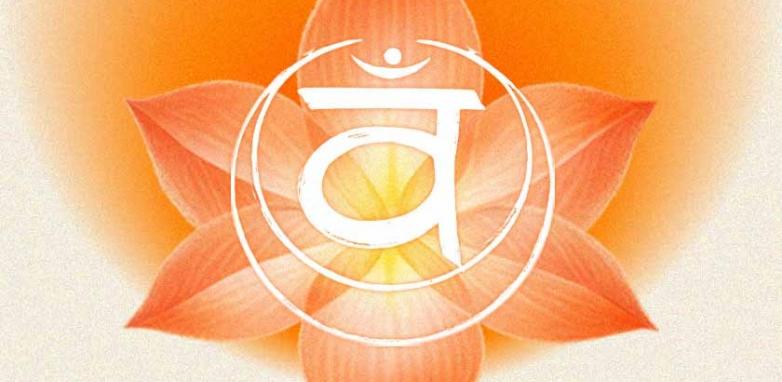
It is associated with the color orange, connected to vitality, movement and emotional expression, and with the Water element. Its symbol is a six-petaled lotus flower with a crescent moon at the center, representing fluidity, cycles and continuous transformation.
Main information about the sacral chakra:
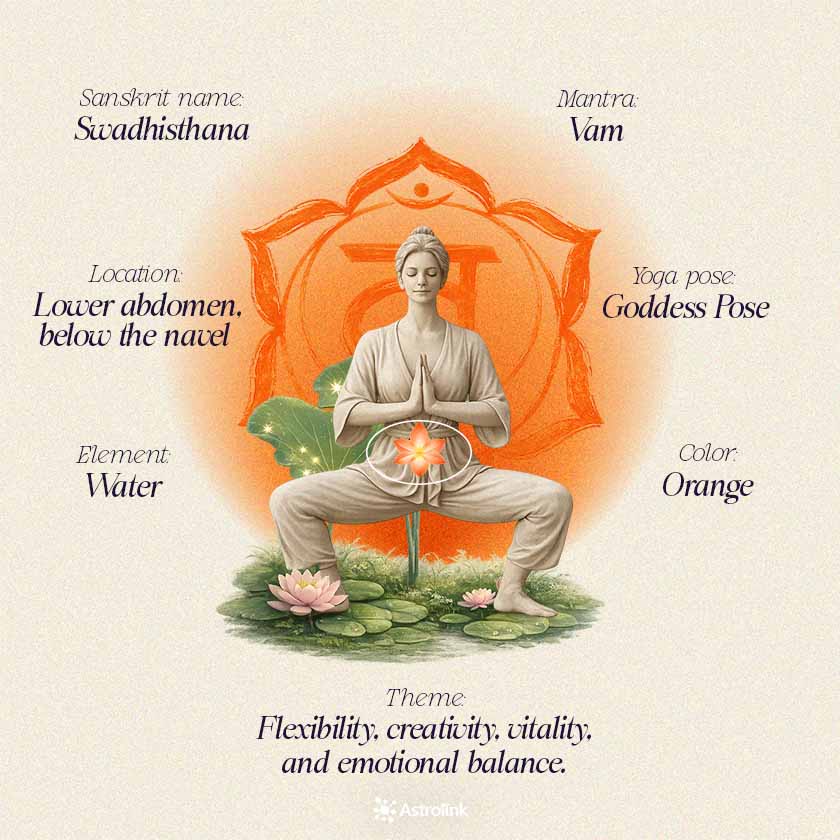
- Sanskrit name: Swadhisthana
- Meaning: dwelling place of the self, one’s own place or foundation of pleasure
- Position: lower abdomen, sacral region
- Element: Water
- Color: orange
- Mantra: Vam
- Central theme: emotions, pleasure, creativity and bonds
- Symbol: six-petaled lotus with a crescent moon
The sacral chakra is the second step in a journey that begins in the body and expands into emotional experience. If you have not yet read about the starting point of this journey, begin with the article Root Chakra: what Muladhara is and what it says about you.
To understand the complete system, it is also worth reading The 7 chakras: what they are, what they are for and how to balance them.
How does the sacral chakra influence emotions, creativity and relationships?
This chakra is present in more moments than you might imagine. It appears in the way you react to criticism, in how much you allow yourself to feel pleasure, and in the ease or difficulty you have in creating genuine bonds.
When Swadhisthana is in balance, emotions circulate without becoming a burden. You can feel without getting lost in what you feel. Creativity finds a natural outlet, relationships become lighter, and pleasure in everyday experiences appears without guilt or excess.
When it is out of balance, the movement can go in either direction: repressed emotions that cannot find expression or emotions so intense that they become difficult to manage. Heavy bonds, blocked creativity and difficulty engaging with your own life may also appear.
In energetic traditions, the sacral chakra is associated with the Water element and the Moon, two symbols of fluidity, cycles and sensitivity. Just as water adapts to the environment it moves through, this chakra is connected to the ability to deal with change, to feel without hardening and to transform emotions into expression.
This relationship with movement also appears in symbolic associations with the pelvic region and the fluids of the body. The central idea is the same: when there is blockage, emotional energy loses fluidity; when there is balance, feelings, bonds and creativity find a way through.
Blocked sacral chakra: what are the main signs?
When the sacral chakra, also called the sexual chakra, is blocked or imbalanced, emotions lose their natural flow. Life may feel less vibrant, bonds more difficult and pleasure more distant.
Signs of a weakened or blocked sacral chakra:
- Feeling of emotional emptiness or melancholy without a clear cause
- Lack of motivation for activities that once brought pleasure
- Difficulty connecting with others or creating bonds
- Emotional repression or difficulty expressing feelings
- Shame or guilt related to pleasure
- Low sexual interest or difficulty experiencing sexuality naturally
- Feeling disconnected from your own body
Signs of an overactive sacral chakra:
- Very intense emotions that are difficult to regulate
- Possessiveness or emotional dependence in relationships
- Compulsive behaviors related to pleasure, consumption or addictions
- Emotional restlessness or constant stress
- Difficulty accepting changes or losses in relationships
These signs are not diagnoses. They are an invitation to observe how your emotions, bonds and relationship with pleasure are flowing right now.
What is a balanced sacral chakra like?
When Swadhisthana is in balance, the change appears in the quality of everyday experience. Life gains more color.
Some aspects that energetic traditions associate with a balanced sacral chakra:
- Ease in recognizing and expressing emotions naturally
- Lighter, more spontaneous relationships without excessive dependence
- Ability to experience pleasure in a healthy way and without guilt
- More present and accessible creativity and imagination
- Openness to new experiences and to life’s changes
- Emotional sensitivity without loss of balance
- Connection with your own body and senses
Balance, here, does not mean the absence of emotion. It means being able to feel without drowning in what you feel.
How to balance the sacral chakra in everyday life?
To balance the sacral chakra, the first step is to observe your emotions, your bonds and your relationship with pleasure. More than forcing positivity or constantly seeking stimulation, caring for this chakra involves recovering fluidity, presence in the body and emotional expression.
Noticing where there is repression and where there is excess is already a real step. From this awareness, some practices can support the process.
But there is a difference between occasional practices and integrated work with the energy system. Understanding how the sacral chakra relates to the other centers, which patterns it carries and how to work with it in depth requires going beyond the surface.
This is the path the Astrolink Chakra Guide opens: a journey through the seven chakras in an integrated way, connecting body, emotion, behavior patterns and consciousness.