Retrograde Planets: What They Are, How They Work, and What Astrology Really Says
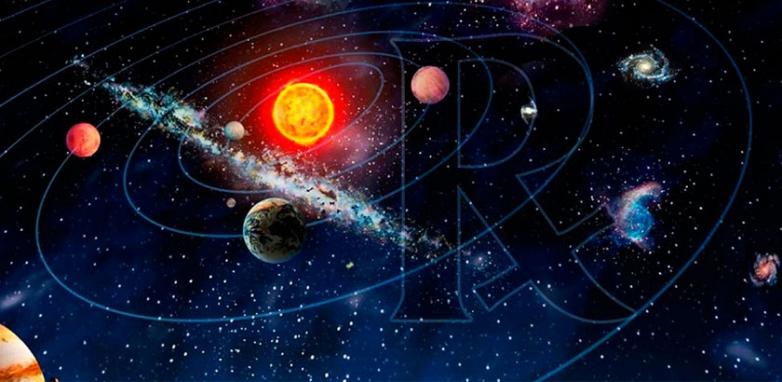
Retrograde planets are planets that, when observed from Earth, appear to move in reverse along the zodiac. This is an optical illusion: no planet actually changes its orbital direction. The phenomenon is caused by the relative motion between Earth and other planets as they orbit the Sun. The Sun and Moon never go retrograde. All other planets do so in specific periods and frequencies, each carrying its own symbolic meaning in Astrology.
Of all retrograde planets, Mercury is the most famous and probably the most feared. A huge number of people brace for Mercury retrograde periods with excessive worry, convinced that everything will go wrong. The reality, however, is more nuanced than that. This article offers a more careful reading of what actually happens when a planet goes retrograde, from both an astronomical and an astrological standpoint.
What Is Planetary Retrograde?
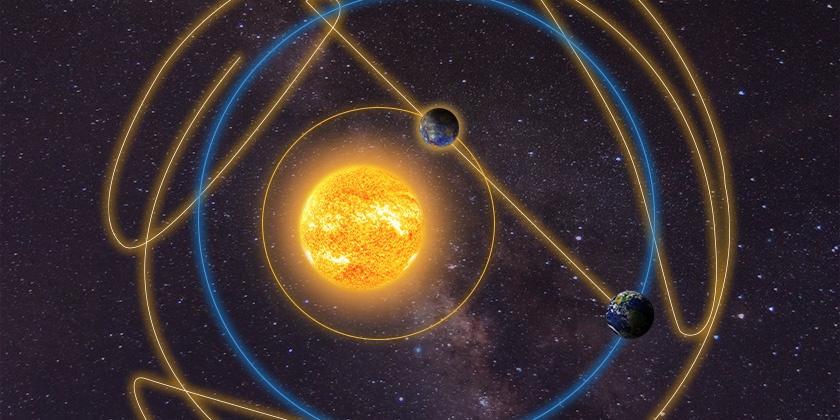
Retrograde motion is an apparent phenomenon: from Earth's perspective, certain planets seem, at specific moments, to move backwards along their usual path in the sky. It is important to be clear from the start that no planet actually reverses its orbital direction. What changes is the observer's perspective.
This is, therefore, a geocentric optical illusion, created by the relative motion between Earth and other planets as they orbit the Sun. Picture two cars on a highway: when one overtakes the other at different speeds, the slower car appears to move backward even though it is still moving forward. The same principle applies to planets observed from Earth.
Why Does the Point of Observation Matter in Astrology?
To understand what retrograde motion means in Astrology, it is first necessary to understand the vantage point from which planets are observed. There are two major systems: heliocentric and geocentric.
Heliocentrism
In the heliocentric system, the Sun is at the center. Planets orbit it in a direct, or prograde, motion, following their orbits without ever reversing. In this model, retrograde motion simply does not exist as a real phenomenon — it is purely a matter of relative perspective between two moving bodies.
Geocentrism
In the geocentric system, Earth is at the center of observation. This is the system used by traditional Astrology. What matters here is the apparent motion of celestial bodies as seen from Earth, not their actual path through space.
The validity of geocentrism in Astrology is not a rejection of modern astronomy: it is a choice of reference frame. Just as the Sun "rises" and "sets" in a way that usefully organizes our day — even though it is Earth that rotates — geocentrism offers an effective symbolic map for astrological interpretation. The Sun at the beach has value for human biological rhythms, regardless of which body is actually moving.
What If the Point of Observation Were Somewhere Else?
If Astrology were practiced from Mars or the Moon, the retrograde patterns would be entirely different. Mercury, for example, might retrograde at different times; planets that retrograde from Earth might be direct from there. This reinforces that retrograde motion is always relative to the point of observation. For Astrology, that point is Earth.
What Are the Types of Motion in Astrology's Celestial Sphere?
Astrology works with three types of planetary motion:
Direct Motion
The planet follows its usual path through the zodiac in what we call prograde or direct motion. This is the standard movement.
Retrograde Motion
The planet appears to move backward through the zodiac. From a symbolic standpoint, Astrology interprets this movement as a period of review, internalization, or reprocessing of that planet's energies.
Stationary
Between direct and retrograde motion there is a brief moment when the planet appears to stop. This is called a station. It is a relatively rare transitional period that many astrologers consider symbolically intense.
Can Stars Go Retrograde?
Stars are called "fixed" in Astrology, but that is not technically precise. They move too, only at a far slower rate than planets.
The phenomenon responsible for this movement is the precession of the equinoxes: a gradual wobble in Earth's rotational axis that causes the vernal point, the reference for the start of Aries in the tropical zodiac, to shift over time. One complete cycle of this movement takes approximately 25,800 years. This is why, on a human timescale, the stars appear fixed.
The Zodiac Moves Only in the Retrograde Direction
This point deserves special attention. The zodiac itself, as measured from the vernal point, moves always in the retrograde direction relative to the fixed stars. This is precisely why tropical astrological signs and astronomical constellations of the same name no longer coincide: the tropical zodiac's reference point has shifted over millennia in the opposite direction from the constellations.
In other words: retrograde motion is not an exceptional or problematic phenomenon. It is built into the very structure of the astrological system.
Does the Sun Go Retrograde?
No. The Sun never shows retrograde motion. From a geocentric perspective, the Sun always moves in the direct direction through the zodiac, covering approximately one sign per month over the course of a year.
Does the Moon Go Retrograde?
No. Like the Sun, the Moon also never goes retrograde in Astrology. Its motion is always direct.
How Does Each Planet Behave During Retrograde?
Outer Planets: Mars, Jupiter, Saturn, Uranus, Neptune, and Pluto
Planets that lie outside Earth's orbit go retrograde when they are in opposition to the Sun — that is, when Earth passes between them and the Sun. At that moment, the difference in orbital speed between Earth and the more distant planet creates the illusion of backward movement.
Planets farther out, such as Jupiter, Saturn, Uranus, Neptune, and Pluto, spend longer periods of the year in retrograde because the orbital speed difference is greater. Mars retrogrades for a shorter period, roughly 7 to 10% of the time.
Inner Planets: Mercury and Venus
Inner planets behave differently because their orbits lie inside Earth's orbit. They never stray far from the Sun in the sky: Mercury can be no more than 28° away from the Sun, keeping it always close to it from a geocentric perspective.
Superior Conjunction: Direct Motion
When Mercury or Venus are on the far side of the Sun from Earth, in superior conjunction, they move in direct motion. This is the moment when the planet is "behind" the Sun from Earth's perspective.
Inferior Conjunction: Retrograde Motion
When Mercury or Venus pass between Earth and the Sun, in inferior conjunction, they go retrograde. This is inevitable: the geometry of the encounter requires that the planet, being closer and moving faster in its orbit, temporarily appears to move backward as seen from Earth.
This means that every inferior conjunction of Mercury or Venus occurs with those planets in retrograde motion. It is not an anomaly: it is a predictable geometric pattern.
Venus, given its orbital characteristics, is the planet that spends the least time retrograde of all the planets studied in Astrology.
Directions in Astrology
Beyond direct, retrograde, and stationary motion, Astrology works with what are called Directions: predictive techniques that project the birth chart forward through time.
Primary Directions, developed by Ptolemy and refined by Regiomontanus and others, use the real motion of celestial bodies in the celestial sphere as the basis for calculation. Secondary Directions work with the symbolic principle that each day after birth corresponds to one year of life. In these systems, a planet's retrograde motion can carry its own symbolic implications in predictive readings.
A Matter of Common Sense
Planetary retrograde is a predictable astronomical phenomenon, geometrically understandable and symbolically rich. The problem is not the phenomenon itself, but the way it is often presented: with exaggeration, alarmism, and without the care to explain what is actually happening.
Understanding what retrograde planets are is the first step toward a more grounded, less anxious Astrology. To explore this further, we recommend reading the companion article on the important reflections that retrograde motion invites us to consider.